The GPS was accurate ... or it had been the last time anyone looked. The travelers trusted their memory, assuming familiarity would keep them on course. The drift happened gradually. Each adjustment felt reasonable but eventually delivered them to new, unexpected territories.
Spiritual drift rarely announces itself but slips in quietly, disguised as faithfulness or routine. Churches keep busy and seats stay filled but somewhere beyond the noise, the call to holiness, to be utterly transformed by Christ, begins to fade.
John 21:1-17 gives us a striking picture of this slow drift and Christ’s gentle restoration. After the resurrection, the disciples returned to familiar routines. Familiarity is comfortable, safe and predictable. It’s natural to return to what you know when we’re unsure, exhausted or spiritually dulled. The posture of holiness is shaped as we repeatedly return to Jesus instead of escaping to familiar shores. In that early morning fog, Jesus calls from the shore, not to shame them, but to reorient and remind them who they are.
For some, the term holiness is old-fashioned, conjuring images of musty hymnals and others’ high expectations rather than the joy and peace it’s meant to bring. We distanced ourselves from the “language of perfection” to avoid accusations of legalism or judgement. Like Peter, we’re zealous, sincere and yet easily disoriented by cultural tides or personal insecurities. As Jesus did on that shoreline, Christ calls the church back again, in our cultural moment, not with condemnation but with invitation.
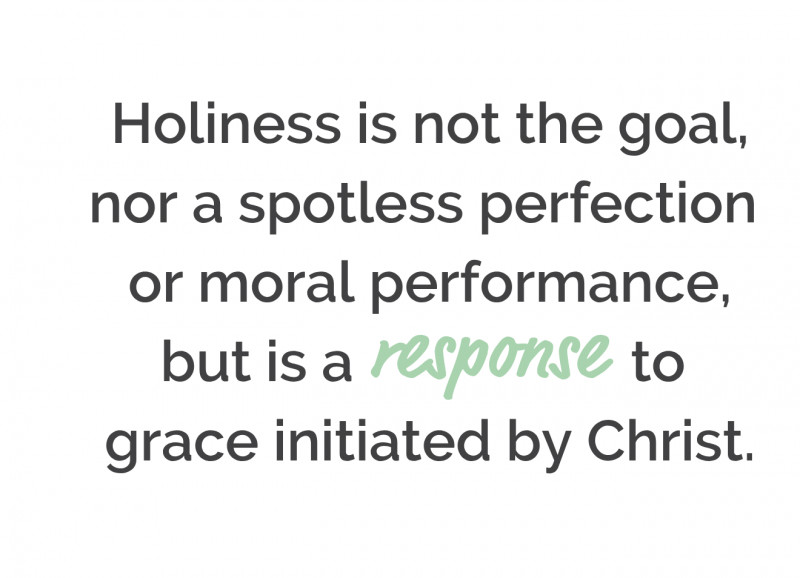
An increasing trend currently, shaped by the pursuit of self-development and achievement, reframes holiness as an individualized wellness. Fulfillment, happiness and personal meaning become primary goals, replacing the Spirit’s deep and sometimes uncomfortable work of purifying the heart. Holiness is not the goal, nor a spotless perfection or moral performance, but is a response to grace initiated by Christ.
John Wesley described holiness as perfect love: “A heart habitually filled with the love of God and neighbor.” Jesus embodies this in John 21 as he restores Peter, not through lecture, but through relationship. Christ calls, “Do you love me?” and Peter echoes three denials. Each question is a healing act. Each answer is a missional call.
Holiness is not a destination we earn or an escape from the things of our world. It’s the wholeness of God’s character reflected in us as we respond to his grace. Reduced to a list of dos and don’ts, we risk building an image of holiness on our own terms, forgetting that the miracle always begins with his direction not our effort.
This humbling, freeing realization forces us to question our role. Our part is surprisingly small. Holiness is the Spirit’s work. Like the disciples waiting in the boat, we aren’t the ones who create the catch. We simply cast the nets where he tells us. Waiting becomes formation, stillness becomes preparation, readiness requires patience to receive grace and grace sends us outward.
In John 21, each loving affirmation is followed by a missional command: “Feed my lambs,” “Tend my sheep.” Holiness is love in motion, shaping our speech, generosity and concern for the forgotten. It compels us to move beyond ourselves into the world’s wounds with Christ’s healing presence.
Our Wesleyan history echoes this shoreline moment. Holiness has always had a public face that stands in places of injustice with stubborn hope shaped by grace. The early Methodist movement stepped into prisons, mines, hospitals, workhouses and streets where the poor were ignored. They fought slavery, advocated for labor justice and refused to let holiness become retreat. As Peter restored and recommissioned, they carried holy love’s fire to the places Christ loves most.
This central truth is embedded in tradition: To be made holy is to be made useful to God for the sake of others. Holiness is not withdrawal, but engagement. It’s the Spirit’s conviction that love must take sides on behalf of the vulnerable, oppressed and overlooked.
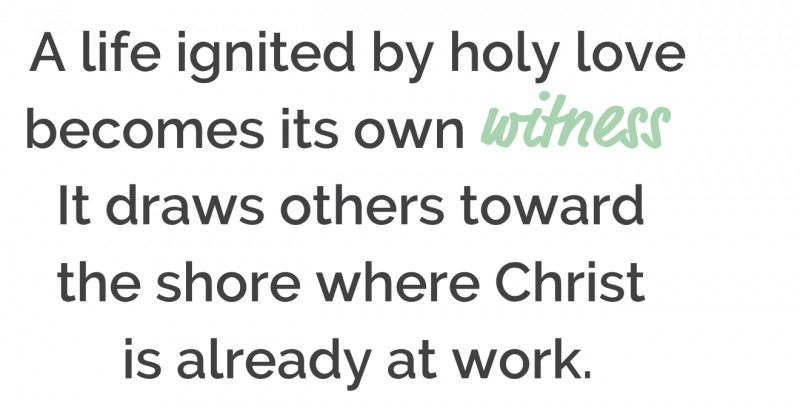
A famous line often attributed to Wesley reads, “set yourself on fire with passion, and people will come for miles to watch you burn.” This sentiment fits the movement he led, echoing the moment Peter leaped into the sea to reach Jesus. A life ignited by holy love becomes its own witness. It draws others toward the shore where Christ is already at work.
A holy church doesn’t hide its fire. She carries it into the darkness patiently, humbly and with the same Spirit-filled courage Christ breathed into Peter on that quiet morning by the sea. Just as Jesus restored and recommissioned his disciples in John 21, he continues calling to his church today:
“Do you love me? … [then] feed my sheep.”
The ESV® Bible (The Holy Bible, English Standard Version®), © 2001 by Crossway, a publishing ministry of Good News Publishers. ESV Text Edition: 2025.