In John 17:15-19, Jesus was praying for his friends in his final hours. He knew what was coming, not only for himself but also for those who had been with him for the last few years. His request in these verses? That his friends would be protected, sanctified and sent. Another name -- holiness.
Wesleyans believe God wants us to be holy. This holiness does not make us free of fault or error; holiness is God using his power to provide full salvation — freeing us from sin’s power and imparting his truth and love into our hearts. We believe that God can empower us to love him fully, which in turn means loving others fully (logically speaking, can we claim to love God fully but not love someone?). This is why many will call us a denomination of hope. Statements like “I am who I am and that can’t change,” or “this will always be my struggle,” or feelings of shame don’t have to be on repeat. Sin’s power is replaced with total love.
When I first learned about Wesleyans, I discovered our lifestyle differences. Next, I was taught the doctrine of holiness. But it took me a while to put all the puzzle pieces together. Freedom from sin is beautiful. It feels wonderful to no longer wear those chains. But Jesus’ prayer of protection and sanctification (what we call holiness) found in John 17:15-19 was less about what we don’t do and more about being free TO love, free TO go. No distractions, no barriers, nothing hindering a person from fully loving God and others. God’s holiness protects us from within, enabling us to be fully sent to love others and share his message of truth with the world.
Let me be clear. Although we receive the benefits, we aren’t the focus of holiness. Holiness’ primary purpose is to magnify the Lord. As his image bearers, holiness in us is like a mirror that bounces the rays of the sun back to their source. God’s love and power that transforms lives demonstrates his awesomeness. He’s the only one worthy of praise as we discuss holiness! But, as God transforms a heart to love him and others, a secondary component of holiness emerges. Holiness transforms the way a person thinks and behaves, which in turn transforms how that person interacts with others. John and Charles Wesley, church fathers in our tradition, stressed that holiness was meant to be social, experienced within a community and lived out among others.
Jesus didn’t want his disciples to be sanctified so they would be more easily accepted as they proclaimed the gospel. It wasn’t to make them more likeable. It certainly wasn’t to provide wealth and prosperity. His disciples’ sanctification was to ensure the Holy Spirit’s power could flow through them.
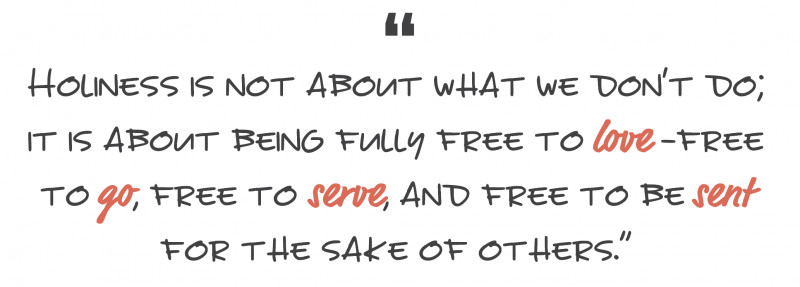
Holiness is empowerment. It’s removing all barriers so God’s Spirit can work through us wherever we go. The “sin that so easily entangles” (Heb. 12:1) keeps us from reaching out. When God has given us the grace to love him with all that we are, no secret sin, lie, bitterness or other barrier keeps us from being obedient. Sin no longer taints how we see our world. We can be sent to care for others and reach the lost because we love the way God does.
For centuries, the Jewish people had turned God’s command “be holy for I am holy” into a series of rules to be followed and an excuse to stay as separate as possible from others. Their holiness pursuit created division and judgment and was used as a badge of honor and a weapon against others. For Christians today, when we lose our focus on being a sent people, we can easily slip into a similar pattern.
Jesus’ prayer that God sanctify his followers established a new pattern in the minds of his Jewish disciples as they listened to him speak. Jesus was making the connection that holiness was about staying WITH people and BEING among others out of love for them. Jesus was known to touch, listen and be with all sorts of people whom others wouldn’t dare to be with — and Jesus prayed his friends would do the same.
As Wesleyans, our holiness theology is why we’ve been known for our engagement in the world. God’s salvation can fully transform our lives, and our love for God and others sends us into the world. That might involve foster care, creation care, immigration ministries, Hephzibah62:4, Global Partners, human trafficking awareness, World Hope, local church involvement and an endless list of possibilities. It’s also why we must continue to pray similar prayers as John Wesley’s covenant prayer, which includes the words “Put me to what you will, place me with whom you will.” It can be too easy to use holiness as an excuse to isolate ourselves. The other temptation can be to live as one sent but try to skip the holiness part. Without God’s empowerment through holiness, we’re in danger of running out of steam, falling prey to the lies of Satan or a host of other distractions.
May our prayer as Wesleyans continue in the spirit of Jesus: “God, sanctify us so we may be empowered and sent out — unburdened by sins and fully free to love you and others.”
Holy Bible, New International Version®, NIV® Copyright ©1973, 1978, 1984, 2011 by Biblica, Inc.® Used by permission. All rights reserved worldwide.